Buy mp4d.com ?
We are moving the project
mp4d.com .
Are you interested in purchasing the domain
mp4d.com ?
domain@kv-gmbh.de · 0541-91531010
Buy mp4d.com ?
When do Van der Waals forces and dipole-dipole interactions occur?
Van der Waals forces occur between all atoms and molecules, regardless of their polarity, due to temporary fluctuations in electron distribution. Dipole-dipole interactions, on the other hand, occur between polar molecules that have a permanent separation of positive and negative charges. Both types of interactions are important in determining the physical properties of substances, such as their boiling and melting points, and play a significant role in the behavior of gases, liquids, and solids. **
What is the difference between dipole-dipole interactions and van der Waals forces?
Dipole-dipole interactions occur between molecules that have permanent dipoles, meaning they have a positive and negative end. These interactions are stronger than van der Waals forces, which are temporary attractive forces between all molecules, regardless of their polarity. Van der Waals forces include London dispersion forces, which are caused by temporary fluctuations in electron distribution within molecules, and are generally weaker than dipole-dipole interactions. **

Similar search terms for Van der Waals Dipole
Top-Angebote
Products related to Van der Waals Dipole:
-
Penguin The Body Keeps the Score: Mind, Brain and Body in the Transformation of Trauma by Bessel van der KolkTHE INTERNATIONAL BESTSELLER - OVER 3 MILLION COPIES SOLD'Dr. van der Kolk's masterpiece combines the boundless curiosity of the scientist, the erudition of the scholar, and the passion of the truth teller' Judith Herman, author of Trauma and Recovery The effects of trauma can be devastating for sufferers, their families and future generations. Here one of the world's experts on traumatic stress offers a bold new paradigm for treatment, moving away from standard talking and drug therapies and towards an alternative approach that heals mind, brain and body. 'Fascinating, hard to put down, and filled with powerful case histories. . . . the most important series of breakthroughs in mental health in the last thirty years' Norman Doidge, author of The Brain that Changes Itself 'An astonishing and important book. The trauma Bible. I cannot recommend it enough for anyone struggling with...well...anything' Tara Westover9,99 £*Shipping: 2,99 £Secure redirect to the provider
-
Pro-Ject The Body Keeps the Score & In Stitches 2 Book Collection Set by Bessel van der Kolk & Nick Edwards – Trauma, Mental Health & Medical Memoir CollectionThe Body Keeps the Score: Mind, Brain and Body in the Transformation of Trauma By Bessel van der Kolk & In Stitches: The Highs and Lows of Life as an A&E Doctor By Nick Edwards 2 Books Collection Set The Body Keeps the Score The effects of trauma can be devastating for sufferers, their families and future generations. Here one of the world's experts on traumatic stress offers a bold new paradigm for treatment, moving away from standard talking and drug therapies and towards an alternative approach that heals mind, brain and body. In Stitches Dr Nick Edwards is an Accident and Emergency (A&E) Doctor working in the UK and a passionate believer in the NHS. However the reforms, political correctness and the Anglo-Saxon culture of binge drinking and fighting and the resulting A&E visits are a strain on his sanity. So, to keep up his morale, he began writing down his feelings a form of literary cathartic therapy the results of which make up this book.From dealing with cardiac arrests and car accidents, to people with Arrest Avoidance Syndrome and others who haven t quite read the big red sign above their heads as they walk into A&E, In Stitches paints a vivid picture of what it s really like working at the sharp end of the NHS today. It s funny, it s heartbreaking and it s infuriating. It s also more informative than any government press release.9,99 £*Shipping: 2,99 £Secure redirect to the provider
-
Lush Living Finds Perforated Brick Assembly Toy Accessories With Technology Mechanical Wheels Perforated Brick Assembly Toy Accessories With Technology Mechanical WheelsEnhance Creativity with Technology Mechanical Wheels Unlock the power of innovation with our technology mechanical wheels, designed specifically for perforated brick assembly toy accessories. Whether you are a hobbyist or a seasoned builder, these...43,97 $*Shipping: 0,00 $Secure redirect to the provider
-
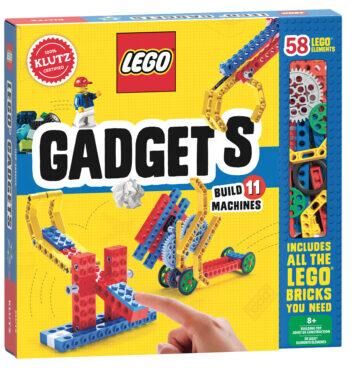
Klutz: LEGO GadgetsThis activity kit will have you building 11 machines including a gravity powered car and a wacky boxing robot. The fun doesn't stop once you've completed all of the projects in the book - open-ended prompts will inspire you to continue experimenting...24,99 $*Shipping: 0,00 $Secure redirect to the provider


-
Are the dipole-dipole interaction and the Van der Waals forces different or the same?
The dipole-dipole interaction and Van der Waals forces are different. The dipole-dipole interaction occurs between molecules with permanent dipoles, where the positive end of one molecule is attracted to the negative end of another. Van der Waals forces, on the other hand, encompass a broader range of intermolecular forces, including dipole-dipole interactions, as well as London dispersion forces and hydrogen bonding. Therefore, while dipole-dipole interactions are a specific type of Van der Waals force, Van der Waals forces encompass a wider range of interactions between molecules. **
-
What are the characteristics of Van der Waals forces, dipole-dipole interactions, and hydrogen bonding?
Van der Waals forces are weak attractive forces between molecules due to temporary dipoles that occur when the electron distribution around an atom is momentarily uneven. Dipole-dipole interactions occur between polar molecules with permanent dipoles, where the positive end of one molecule is attracted to the negative end of another. Hydrogen bonding is a specific type of dipole-dipole interaction that occurs between a hydrogen atom bonded to a highly electronegative atom (such as oxygen, nitrogen, or fluorine) and a lone pair of electrons on another electronegative atom. These interactions are stronger than van der Waals forces and regular dipole-dipole interactions, and they play a crucial role in determining the physical and chemical properties of substances. **
-
How do you distinguish between Van der Waals forces, dipole-dipole interactions, and hydrogen bonds?
Van der Waals forces are the weakest of the three interactions and occur between all molecules, regardless of their polarity. Dipole-dipole interactions occur between polar molecules and are stronger than Van der Waals forces. Hydrogen bonds are the strongest of the three interactions and occur between molecules with a hydrogen atom bonded to a highly electronegative atom such as oxygen, nitrogen, or fluorine. These interactions are important in determining the physical and chemical properties of substances and play a crucial role in various biological processes. **
-
Which force - dipole-dipole interaction, hydrogen bonding, or van der Waals forces - is stronger and why?
Hydrogen bonding is the strongest force among the three mentioned. This is because hydrogen bonding involves a strong electrostatic attraction between a hydrogen atom and a highly electronegative atom such as oxygen, nitrogen, or fluorine. This results in a strong dipole-dipole interaction, making hydrogen bonding stronger than dipole-dipole interaction and van der Waals forces. **


What are Van der Waals bonds?
Van der Waals bonds are weak intermolecular forces that occur between molecules. These bonds are caused by the temporary dipoles that form in molecules due to the uneven distribution of electrons. Van der Waals bonds are responsible for the attraction between molecules and contribute to properties such as boiling and melting points, as well as the physical state of a substance. While they are weaker than covalent or ionic bonds, Van der Waals bonds still play a significant role in determining the behavior of molecules and their interactions with one another. **
Where can one find van der Waals forces, dipole-dipole forces, and hydrogen bonds in everyday life?
Van der Waals forces can be found in everyday life in the form of geckos climbing walls using the weak intermolecular forces between their feet and the surface. Dipole-dipole forces can be observed in the interaction between water molecules, which have a slight positive and negative charge, leading to the formation of hydrogen bonds. Hydrogen bonds are also present in DNA, where they help hold the double helix structure together. These forces are essential for various biological and physical phenomena in our daily lives. **
Top-Angebote
Products related to Van der Waals Dipole:
-
1037 Van Der Hagen 85mm Safety RazorVan Der Hagen 85mm Chrome Safety Razor also comes with 5 German made Razor Blades to get you started right away. For a smooth comfortable shave our 85mm handle provides the perfect weight and balance for excellent control and fits in any size hand....22,99 $*Shipping: 0,00 $Secure redirect to the provider
-
Penguin The Body Keeps the Score: Mind, Brain and Body in the Transformation of Trauma by Bessel van der KolkTHE INTERNATIONAL BESTSELLER - OVER 3 MILLION COPIES SOLD'Dr. van der Kolk's masterpiece combines the boundless curiosity of the scientist, the erudition of the scholar, and the passion of the truth teller' Judith Herman, author of Trauma and Recovery The effects of trauma can be devastating for sufferers, their families and future generations. Here one of the world's experts on traumatic stress offers a bold new paradigm for treatment, moving away from standard talking and drug therapies and towards an alternative approach that heals mind, brain and body. 'Fascinating, hard to put down, and filled with powerful case histories. . . . the most important series of breakthroughs in mental health in the last thirty years' Norman Doidge, author of The Brain that Changes Itself 'An astonishing and important book. The trauma Bible. I cannot recommend it enough for anyone struggling with...well...anything' Tara Westover9,99 £*Shipping: 2,99 £Secure redirect to the provider
-
Pro-Ject The Body Keeps the Score & In Stitches 2 Book Collection Set by Bessel van der Kolk & Nick Edwards – Trauma, Mental Health & Medical Memoir CollectionThe Body Keeps the Score: Mind, Brain and Body in the Transformation of Trauma By Bessel van der Kolk & In Stitches: The Highs and Lows of Life as an A&E Doctor By Nick Edwards 2 Books Collection Set The Body Keeps the Score The effects of trauma can be devastating for sufferers, their families and future generations. Here one of the world's experts on traumatic stress offers a bold new paradigm for treatment, moving away from standard talking and drug therapies and towards an alternative approach that heals mind, brain and body. In Stitches Dr Nick Edwards is an Accident and Emergency (A&E) Doctor working in the UK and a passionate believer in the NHS. However the reforms, political correctness and the Anglo-Saxon culture of binge drinking and fighting and the resulting A&E visits are a strain on his sanity. So, to keep up his morale, he began writing down his feelings a form of literary cathartic therapy the results of which make up this book.From dealing with cardiac arrests and car accidents, to people with Arrest Avoidance Syndrome and others who haven t quite read the big red sign above their heads as they walk into A&E, In Stitches paints a vivid picture of what it s really like working at the sharp end of the NHS today. It s funny, it s heartbreaking and it s infuriating. It s also more informative than any government press release.9,99 £*Shipping: 2,99 £Secure redirect to the provider
-
When do Van der Waals forces and dipole-dipole interactions occur?
Van der Waals forces occur between all atoms and molecules, regardless of their polarity, due to temporary fluctuations in electron distribution. Dipole-dipole interactions, on the other hand, occur between polar molecules that have a permanent separation of positive and negative charges. Both types of interactions are important in determining the physical properties of substances, such as their boiling and melting points, and play a significant role in the behavior of gases, liquids, and solids. **
-
What is the difference between dipole-dipole interactions and van der Waals forces?
Dipole-dipole interactions occur between molecules that have permanent dipoles, meaning they have a positive and negative end. These interactions are stronger than van der Waals forces, which are temporary attractive forces between all molecules, regardless of their polarity. Van der Waals forces include London dispersion forces, which are caused by temporary fluctuations in electron distribution within molecules, and are generally weaker than dipole-dipole interactions. **
-
Are the dipole-dipole interaction and the Van der Waals forces different or the same?
The dipole-dipole interaction and Van der Waals forces are different. The dipole-dipole interaction occurs between molecules with permanent dipoles, where the positive end of one molecule is attracted to the negative end of another. Van der Waals forces, on the other hand, encompass a broader range of intermolecular forces, including dipole-dipole interactions, as well as London dispersion forces and hydrogen bonding. Therefore, while dipole-dipole interactions are a specific type of Van der Waals force, Van der Waals forces encompass a wider range of interactions between molecules. **
-
What are the characteristics of Van der Waals forces, dipole-dipole interactions, and hydrogen bonding?
Van der Waals forces are weak attractive forces between molecules due to temporary dipoles that occur when the electron distribution around an atom is momentarily uneven. Dipole-dipole interactions occur between polar molecules with permanent dipoles, where the positive end of one molecule is attracted to the negative end of another. Hydrogen bonding is a specific type of dipole-dipole interaction that occurs between a hydrogen atom bonded to a highly electronegative atom (such as oxygen, nitrogen, or fluorine) and a lone pair of electrons on another electronegative atom. These interactions are stronger than van der Waals forces and regular dipole-dipole interactions, and they play a crucial role in determining the physical and chemical properties of substances. **
Similar search terms for Van der Waals Dipole
-
Lush Living Finds Perforated Brick Assembly Toy Accessories With Technology Mechanical Wheels Perforated Brick Assembly Toy Accessories With Technology Mechanical WheelsEnhance Creativity with Technology Mechanical Wheels Unlock the power of innovation with our technology mechanical wheels, designed specifically for perforated brick assembly toy accessories. Whether you are a hobbyist or a seasoned builder, these...43,97 $*Shipping: 0,00 $Secure redirect to the provider
-
Klutz: LEGO GadgetsThis activity kit will have you building 11 machines including a gravity powered car and a wacky boxing robot. The fun doesn't stop once you've completed all of the projects in the book - open-ended prompts will inspire you to continue experimenting...24,99 $*Shipping: 0,00 $Secure redirect to the provider
-
Van Mark Trim A Slitter Accessories 5035 - Knife Steel Slitting S24C S36C and S48CThese Van Mark Slitter Accessories are for the Trim-A-Slitter Models only. Yearly maintenance is important to ensure that your Trim-A-Slitter continues to slit or stiffen aluminum steel vinyl or other materials coil or sheet quickly and accurately....178,87 $*Shipping: 0,00 $Secure redirect to the provider
-
iFixit Essential Electronics ToolkitThe iFixit Essential Electronics Toolkit is a compact starter repair kit for phones, tablets, laptops, game consoles and other small electronics. It includes a precision bit driver with 16 precision bits plus the basic opening and prying tools needed for common repairs such as screen and battery replacements.40,99 £*Shipping: 0,00 £Secure redirect to the provider
-
How do you distinguish between Van der Waals forces, dipole-dipole interactions, and hydrogen bonds?
Van der Waals forces are the weakest of the three interactions and occur between all molecules, regardless of their polarity. Dipole-dipole interactions occur between polar molecules and are stronger than Van der Waals forces. Hydrogen bonds are the strongest of the three interactions and occur between molecules with a hydrogen atom bonded to a highly electronegative atom such as oxygen, nitrogen, or fluorine. These interactions are important in determining the physical and chemical properties of substances and play a crucial role in various biological processes. **
-
Which force - dipole-dipole interaction, hydrogen bonding, or van der Waals forces - is stronger and why?
Hydrogen bonding is the strongest force among the three mentioned. This is because hydrogen bonding involves a strong electrostatic attraction between a hydrogen atom and a highly electronegative atom such as oxygen, nitrogen, or fluorine. This results in a strong dipole-dipole interaction, making hydrogen bonding stronger than dipole-dipole interaction and van der Waals forces. **
-
What are Van der Waals bonds?
Van der Waals bonds are weak intermolecular forces that occur between molecules. These bonds are caused by the temporary dipoles that form in molecules due to the uneven distribution of electrons. Van der Waals bonds are responsible for the attraction between molecules and contribute to properties such as boiling and melting points, as well as the physical state of a substance. While they are weaker than covalent or ionic bonds, Van der Waals bonds still play a significant role in determining the behavior of molecules and their interactions with one another. **
-
Where can one find van der Waals forces, dipole-dipole forces, and hydrogen bonds in everyday life?
Van der Waals forces can be found in everyday life in the form of geckos climbing walls using the weak intermolecular forces between their feet and the surface. Dipole-dipole forces can be observed in the interaction between water molecules, which have a slight positive and negative charge, leading to the formation of hydrogen bonds. Hydrogen bonds are also present in DNA, where they help hold the double helix structure together. These forces are essential for various biological and physical phenomena in our daily lives. **
* All prices are inclusive of VAT and, if applicable, plus shipping costs. The offer information is based on the details provided by the respective shop and is updated through automated processes. Real-time updates do not occur, so deviations can occur in individual cases. ** Note: Parts of this content were created by AI.